
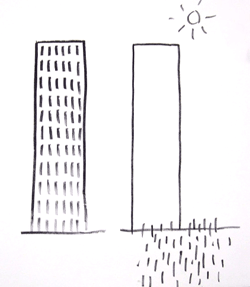
The fact that people are no longer tied to specific places for functions such as studying or learning, says Mr Mitchell, means that there is “a huge drop in demand for traditional, private, enclosed spaces†such as offices or classrooms, and simultaneously “a huge rise in demand for semi-public spaces that can be informally appropriated to ad-hoc workspacesâ€. This shift, he thinks, amounts to the biggest change in architecture in this century. In the 20th century architecture was about specialised structures—offices for working, cafeterias for eating, and so forth. This was necessary because workers needed to be near things such as landline phones, fax machines and filing cabinets, and because the economics of building materials favoured repetitive and simple structures, such as grid patterns for cubicles.
The new architecture, says Mr Mitchell, will “make spaces intentionally multifunctionalâ€. This means that 21st-century aesthetics will probably be the exact opposite of the sci-fi chic that 20th-century futurists once imagined. Architects are instead thinking about light, air, trees and gardens, all in the service of human connections. Buildings will have much more varied shapes than before. For instance, people working on laptops find it comforting to have their backs to a wall, so hybrid spaces may become curvier, with more nooks, in order to maximise the surface area of their inner walls, rather as intestines do. This is becoming affordable because computer-aided design and new materials make non-repetitive forms cheaper to build.
I love these ideas of the sometimes unexpected or unintentional consequences of mass media/technology. The semi-deliberate semi-chaotic long term evidence of technological determinism (the flavours of media) as they become embedded cultural, habits, norms, and even architecture
how does wifi change cubicle culture? how will mobile broadband as accelerating this trend of the new nomadicism.
File under: pls put more electric outlets in your airport terminals, lobbies and public spaces [for the love of god, k thx]
Yeah I totally agree with your views. Now is the time of maximizing the output at the same time keeping this land green. To Reduce CO2 Emissions is concentraded on. There will be more developments made to it in the future, and the future will change in the same vision of our ancestors, we will see a totally different future as our ancestors did, so we need to keep a close eye on it, a revolutionary change is about to appear.
good luck to you !
Yeah I totally agree with your views. Now is the time of maximizing the output at the same time keeping this land green. To Reduce CO2 Emissions is concentraded on. There will be more developments made to it in the future, and the future will change in the same vision of our ancestors, we will see a totally different future as our ancestors did, so we need to keep a close eye on it, a revolutionary change is about to appear.
good luck to you !