“McLuhan believed that all media forms are extensions of our senses, bodies, and psyches, in the way that a hammer is an extension of our hand and a book is an extension of our memory and ideas. As such, they intensify one thing in culture while obsolescing something else.†– The Imagination Challenge, pg 130
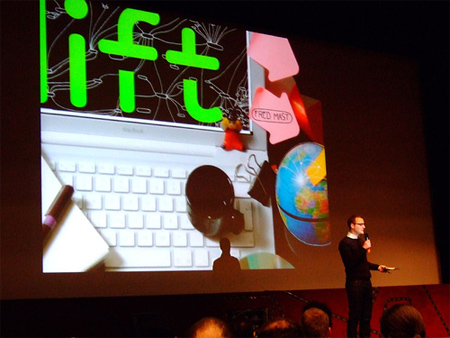
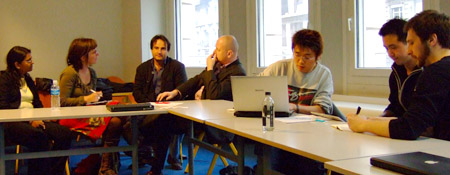
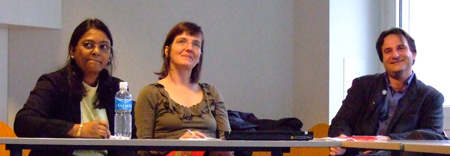
Today thanks to social media, other new innovations and 2.0 everything, we are at the point of explosion of new media in society. In the spirit of “the medium is the message”, how are/will these new media be transforming the structure of society itself, both in our social sphere as well as change to the nature and environment of work? But instead of just looking at the new media we examine these media through he lens of what they displace. What plethora of old/current media should we now consider “dead”. What are the historical precedents? This is the subject of a workshop I had the fortune to lead for a very bright crew of people on this first day zero of LIFT.
Questions of discussion:
Does Media really die? Some argue that media never dies it just adapts. Or that media just sleeps and waits to be revived later in another form. And I say yes, this is often true, but surely you can think of examples of media that failed to adapt enough and faded away?
And also an intentional aspect of this discussion is to be provocative by intentionally exaggerating what we mean by “dead” and even what we mean by “media”.
Step one, brainstorming “dead” media. inintial list
sheet music
the fax machine
8 tracks
town criers
overhead projectors
letter writing
Cds dvds (optical media)
Newspapers
Usb key
Local storage
Paper money
Gold standard
Stock exchange?
Church
God
Authority of power
Authority of opinion
Journalism
Dress codes – more tribal
Places of media theatre
Places of meeting
Geographic locality
Local(?) content
Paper memos
Secretaries….
traditional Conferences
email
Specific media’s considered by the workshop: 1) blogs, bloglines and information overload? 2) e-paper and rollable connected displays in mobile devices 3) IM and twitter and status broadcasting
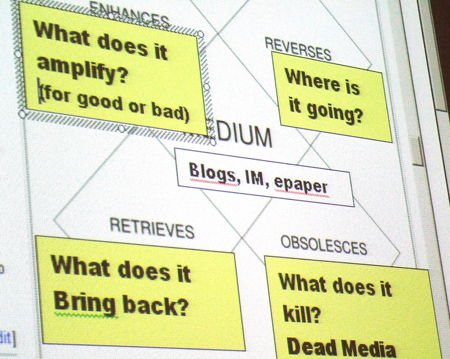
Taking a mcluhanistic view of media disruption and it’s impact on society and economy:

A tetrad is a means of examining the effects of any technology on society by dividing its effects into four categories and displaying them simultaneously. Visually, a tetrad can be depicted as four diamonds forming an X, with the name of a medium in the center. The two diamonds on the left of a tetrad are the Enhancement and Retrieval qualities of the medium, both Figure qualities. The two diamonds on the right of a tetrad are the Obsolescence and Reversal qualities, both Ground qualities.
* Enhancement (figure): What the medium amplifies or intensifies. For example, radio amplifies news and music via sound.
* Obsolescence (ground): What the medium drives out of prominence. Radio reduces the importance of print and the visual.
* Retrieval (figure): What the medium recovers which was previously lost. Radio returns the spoken word to the forefront.
* Reversal (ground): What the medium does when pushed to its limits. Acoustic radio flips into audio-visual tv.
–wikipedia
Our McLuhan inspired “Tetra-pack” format for analyzing new media:
New Media Example: Instant Messaging and Status Broadcasting (ala, msn header, twitter, facebook status. One example developed from the workshop:
Amplifies
Voice and conversation
Mood expression
Personal context casting
Synchronization
Social Network
Proximity awareness
Distractions, white spam?
Smart objects
|
Reversal
Multimedia
Geolocality
Full environmental context
Personal bookmarking
Social Presence ubiquity
More detailated/realistic avatars
|
Retrieves (media revived)
Post it notes
Walkie talky
Passing notes
Short hand
Sign language (codes, emoticons)
Post cards (rather than letters)
Filesharing
|
Obsolesces (Dead media, what does it kill?)
Email
Blogs to an extent (esp, twitter, status broadcasting)
Phone
Water cooler conversation
Privacy
Physical meeting
distances
|
Final additions to the list of dead media:
Organization and predictable outcomes
Staying on objectives?
Management
The line between work and private life (for good and bad)
The office
The home
The school
Copyright
Regulation (oh not?)
Paper maps
Traditional Language
Un-dead media
TV
My Other Posts on Dead media:
Email seen only mostly dead. sort of.
Dead Meme Watch? – Knowledge Management
Lars on dead email
Dead Media Watch #2145 – Email
Dead Fiction
Dead Media [the post that started it all]